
فؤاد حجازي
عن الكاتب فؤاد حجازي
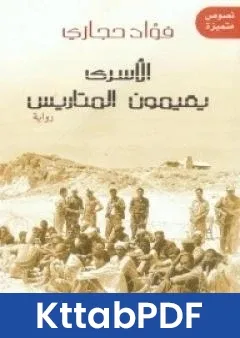
He obtained his high school diploma in 1956 and enrolled in the Faculty of Law at Cairo University in the same year. He was expelled from the faculty in 1959. He participated in the 1967 war and was captured during it. He spent eight months in the Atlit prison in Israel. He says: "Captivity taught me to be more humane, and I saw that we were more civilized and cultured than the Israelis". He wrote about his captivity in the Atlit prison in Israel his short novel "Prisoners Build Trenches", and several short stories that he published in the collection "Salamat". He was imprisoned multiple times for political charges. The first time was in 1959, and he spent thirty-nine months in the Al-Wahat, Egyptian and Al-Qanater prisons. In 1971, he was imprisoned again in the Qalaa prison. He was accused of participating in student demonstrations and spent four months there. During the Bread Protests of January 18 and 19, 1977, he was arrested and spent two months in the Qalaa prison. He worked in various professions. He wrote a novel about the wars that Egypt fought in modern times called "Dancing on Egyptian Drums". In 1968, he founded the series "Popular Literature" in Mansoura, which contributed to solving the publishing problem for new writers. It published over a hundred artistic works, including novels, poetry collections, short story collections, plays, and critical studies. He introduced over thirty literary voices to the scene, including those who made a significant impact, such as Ibrahim Radwan, Zaki Omar, and Mohamed Youssef in poetry, and Adel Hegazy and Abdelrahman El-Gamal in novels and short stories, and Sayed Hafez in theater, and Ali Abdel Fattah, Ibrahim Awad, Ahmed Youssef, Mahmoud Hanfi Kassab, and Abd al-Munim Abdel Qadir, and others. He has authored around thirty books in novels, short stories, theater, applied criticism, and autobiography. He has published nine novels, including "Al-Khala Street" (1968), "A Window on the Tnah Beach" (1972), "The Besieged" (1972), "Men, Mountains, and Bullets" (1972), "Prisoners Build Trenches" (1976), "Omra" (1977), "Al-Qurafa" (1978), "Accused Upon Request" (1982), and "Cluster and Samra" (1996). He has also published six collections of short stories, including "Salamat" (1969), "Karakeb" (1970), "Prisoners of All Ages" (1977), "The Unbridled Time" (1978), "The Nile Springs from Al-Maadi" (1985) and "An Itch for the Boy" (1990). In addition to that, he has published several collections of short stories and novels for children, including "Helwan Mole" (1982), "The Wolves Security" (1988), "The Lion Looks in the Mirror" (1990), "The Peach Tree Receives the Trust" (1990), "Council of Queens" (1996) and "The Swans Laugh" (1998). He has also written two plays in Egyptian dialect, "People Who Dont Have Anything" (1972) and "Carriers of Al-Balalis" (1986), as well as five plays from the single-act plays, titled "Sorry, Diwan President" (1987). He has also written a book in applied criticism titled "Banknotes" and a book that includes chapters from his autobiography titled "Literary Papers". His works have been the topic of scientific researches. Marina Stang wrote about him in her doctoral thesis presented in 1993 to the Institute of Oriental Languages at Stockholm University under the title "Boundaries of Freedom of Expression", and its translation into Arabic was published in a book in 1995. Some of his novels were discussed by Dr. Hamdi Hussein in his doctoral thesis titled "Political Vision in Realistic Novels", presented to the Faculty of Arts at Cairo University in 1993 and published in a book in 1995. Ghada Afifi discussed his novels in her research presented to the Faculty of Alsun at Ain Shams University, titled "War in the Novel" in 1997. Abdul Moneim Abu Zeid also discussed some of his novels in his research titled "The Artistic Structure of the Novel of War in Egypt" presented to the Faiyum Branch of Cairo University in 1999. Some chapters of his novel "Prisoners Build Trenches" have been translated into Russian by Anatoly Agarishev and published in the newspaper "Pravda" in Moscow in 1969. William Hutchins translated his story "The Nile Springs from Al-Maadi" into English and published this translation in the book "Short Egyptian Stories 1970-1980" published by the American University in Cairo in November 1987. The book "Selections from Egyptian Short Story", which was published in German in Berlin in 1990, includes a translation of his story "Six Mother Adel". He has participated in all the conferences held by the Popular Culture, including the conferences of Zagazig (1969), Minya (1984), Damietta (1985), Port Said (1991), and Mansoura (2000). He attended two seminars on the literature of war, the first in Baghdad in February 1989 and the second at Nasser University in Tripoli, Libya, in July 1998. Several researchers have written about him, including Mahmoud Hanfi Kassab in his book "The Agitator" (Mahmoud Hanfi Kassab, Popular Literature Series, Mansoura 1979), and a group of writers in the book "Fifty Years of Art and Struggle" (The Vision Series, Alexandria 1988), and Ghada Afifi in her thesis presented to the Faculty of Alsun at Ain Shams University under the title "War in the Novel" in 1997. Abdul Moneim Abu Zeid has also discussed some of his novels in his research presented to the Faiyum branch of Cairo University under the title "The Artistic Structure of the Novel of War in Egypt" in 1999. He has been translated into different languages, and notable translations include the Russian translation of chapters from his novel "Prisoners Build Trenches" by Anatoly Agarishev, published in the newspaper "Pravda" in Moscow in 1969, and the English translation of his story "The Nile Springs from Al-Maadi" by William Hutchins, published in the book "Short Egyptian Stories 1970-1980" by the American University in Cairo in November 1987. His works have been the subject of scientific research, such as Marina Stangs doctoral thesis on "Boundaries of Freedom of Expression" at Stockholm University in 1993, which was later translated into Arabic and published in a book in 1995.
اشهر كتب فؤاد حجازي
تحميل كتب ومؤلفات فؤاد حجازي pdf